

Hiring a link builder is a bit like hiring a contractor. The good ones are worth every dollar. The bad ones leave you with a mess you have to clean up later.
The hard part is that you can’t judge the work by looking at a sales page. Almost every provider promises “high-authority, relevant links.” Very few can prove it.
This guide shows you how to find reliable link builders in your niche, check their work yourself, and hire the right person without gambling your site’s reputation. It is written for business owners, in-house marketers, and agency owners who want a clear process, not theory.
What Is a Link Builder and Why Does Niche Expertise Matter?
A link builder is a person or team that earns backlinks to your website from other sites. A backlink is simply a link from one website to another. Search engines use these links as one of many signals when they look at a page. If you want the background, Wikipedia’s overview of backlinks is a good plain-English start.
1. What Does a Professional Link Builder Do?
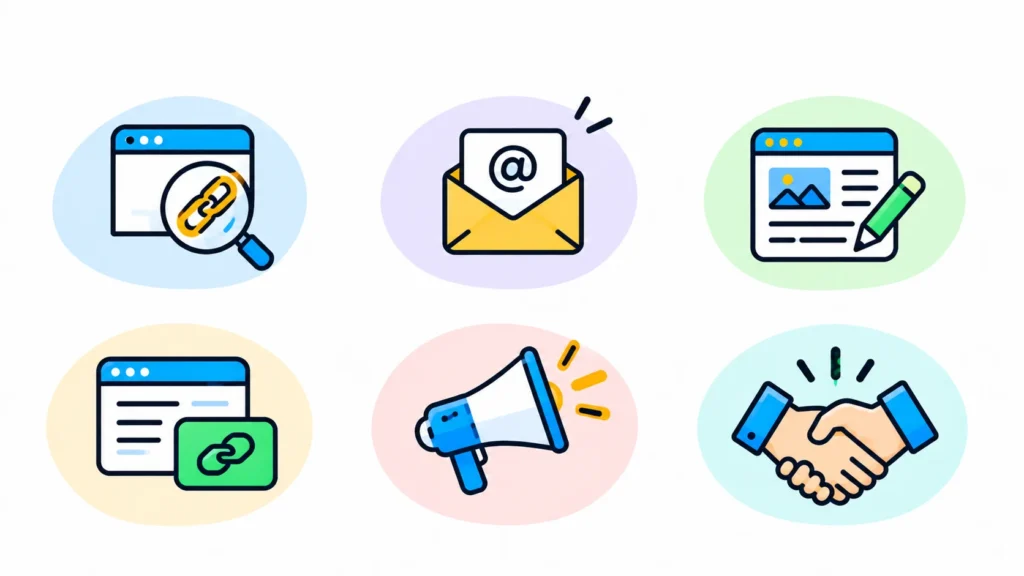
The job is much more than sending emails. A skilled link builder usually handles:
- Prospecting: finding sites that fit your topic and audience.
- Outreach: pitching editors and site owners with a real reason to link.
- Content placements: guest posts, expert quotes, resource page additions, or contextual links in existing articles (often called niche edits).
- Digital PR: creating stories or data that journalists want to cite.
- Relationship building: staying in touch so future links get easier.
2. Why Should You Hire a Link Builder Who Understands Your Niche?
Industry knowledge changes the quality of the result. A link builder who works in SaaS may have no idea which publications matter in dental care, legal services, or home improvement.
Someone who knows your niche already knows the editors, the blogs, and the topics people care about. Their pitches sound credible because they are. Their links also land on pages that make sense for your audience, which is what both readers and search engines want to see.
3. What Makes a Link Builder Reliable?
Think of reliability as five things working together:
- Proof: live links you can click and check.
- Process: a clear explanation of how they find and approve sites.
- Relevance: placements that match your topic.
- Reporting: URLs, anchor text, dates, and link attributes shared with you.
- Ethics: no shortcuts that put your site at risk.
Where Can You Find Reliable Link Builders in Your Niche?
There is no single best place. Each channel has strengths and weak spots, so it helps to use two or three.
1. Search on LinkedIn
LinkedIn is useful because you can see work history, recommendations, and mutual connections. Try searching for “link builder” or “digital PR” together with your industry. You can start with a LinkedIn search for link builders.
Look for people who post about real campaigns, not just generic SEO tips. Check whether they have worked in your sector before. A short, specific message works better than a copy-paste pitch.
Downside: profiles are self-reported, so you still need to verify claims.
2. Explore SEO Communities and Online Forums
Active SEO communities are where link builders trade ideas and ask questions. Subreddits such as SEO and big seo often have threads where people share which providers worked for them and which did not. SEO-focused Facebook groups and Slack communities work the same way.
Read the threads before you post. Look for people who explain their methods and admit trade-offs. Be careful with anyone who shows up only to promote a service.
Downside: advice is anonymous and uneven. Treat it as a lead, not a verdict.
3. Use Freelance Marketplaces
Platforms like Upwork and Fiverr give you access to many freelancers and basic reviews. They are handy for small tests and one-off projects.
Read the portfolios closely. Ask for live URLs, not screenshots. Be wary of listings that sell fixed packages of links at very low prices, because those are often built on volume rather than relevance.
Downside: quality varies a lot, and niche expertise is hard to filter for.
4. Ask for Recommendations from SEO Professionals
Referrals remain the strongest source. Ask SEO consultants, agency owners, or non-competing businesses in your industry who they trust. People rarely recommend a provider unless they would use them again.
You can also expand your professional connections by learning how to build and manage a link building network with relevant website owners, publishers, and SEO professionals.
Ask a follow-up question that matters: “What went wrong, and how did they handle it?” The answer tells you more than a five-star review.
Downside: good link builders often have waiting lists.
5. Explore Link-Building Agencies and Specialized Platforms
Agencies can offer a team, a process, and more capacity. Some specialize in certain industries or methods, such as digital PR or guest posts. Examples of different service models include FATJOE, uSERP, Skale, Authority Builders, Loganix, and Editorial.Link. These are examples of how the market is structured, not endorsements, so evaluate any of them with the same checks below.
Downside: you may work with an account manager rather than the person doing the outreach.
How to Evaluate a Link Builder Before Hiring
This is where most hiring decisions are won or lost. Take your time here.
1. Check Their Previous Link-Building Experience
Ask for past campaigns, ideally in your niche or a close one. Request live URLs of the pages that carry the links. Then open them yourself.
Look at where the link sits. A link inside a useful, relevant article is a good sign. A link buried in a thin post with ten other unrelated links is not.
2. Evaluate Their Niche Expertise
Test their knowledge with a few simple questions:
- Which publications and blogs matter in my industry?
- What topics do editors in this space actually cover?
- What kind of pitch has worked for businesses like mine?
A real specialist answers with names and specifics. A generalist gives vague answers about “authority sites.”
3. Analyze the Websites They Use for Backlinks
You don’t need to take their word for site quality. You can check it with a few tools such as Ahrefs, Semrush, Moz, Majestic, and Google Search Console (for your own site’s data). For a more detailed evaluation, follow this guide to auditing your backlink profile to understand how to identify suspicious links and assess overall backlink quality. Go through this list for each sample site.
Topical relevance. Does the site publish content related to your industry? A relevant site on a smaller scale often beats a big site on an unrelated topic.
Organic traffic. Does the site get real search traffic, and is it stable? A big, sudden drop or traffic from unrelated countries can signal trouble.
Referring domains. Look at who links to the site. A healthy site usually has a varied, natural-looking profile.
Outbound links. Check whether the site links out to many unrelated topics or to casino, pills, and loan sites. That often points to a site that sells links in bulk.
Content quality. Read a few posts. Are they original, edited, and useful, or thin and stuffed with keywords?
Indexation. Search for the site’s domain in Google. If it barely appears, that is a warning.
A quick example makes the point. Imagine two sites you could get a link from:
- Website A: Domain Rating 65, covers random topics, little real organic traffic.
- Website B: Domain Rating 35, focused on your industry, real readers, and original editorial content.
Website B is usually the smarter choice. Metrics like Domain Rating (DR), Domain Authority (DA), and Trust Flow are third-party scores. They are not Google ranking factors, and they can be inflated. Use them as rough hints, never as proof of quality.
4. Understand Their Link-Building Methods
Ask which methods they use and why. Common ones include:
- Guest posting: writing an article for another site.
- Niche edits: adding a link to an existing relevant article.
- Digital PR: earning mentions through news-worthy stories or data.
- Resource page outreach: asking to be listed on a helpful resource page.
- Broken link building: offering your content as a replacement for a dead link.
- Unlinked mention reclamation: asking sites that already mention your brand to add a link.
A good link builder mixes methods based on your goals. Someone who only sells one tactic for every client deserves extra questions.
5. Evaluate Their Outreach Process
Ask to see a sample outreach email with the details removed. Good outreach is short, specific, and clearly written for one editor. Bad outreach is a template with a name swapped in.
Also ask about follow-ups, how they handle rejections, and whether you can approve each site before a placement goes live.
6. Review Their Reporting and Transparency
Reliable providers share the details. At a minimum you should get:
- The live URL of each placement
- The linking domain
- The anchor text used
- The placement date
- Whether the link is followed, nofollow, or sponsored
- A short note on campaign progress
If they won’t tell you where your links are going, treat that as a red flag.
Freelancer vs. Link-Building Agency vs. Independent Specialist
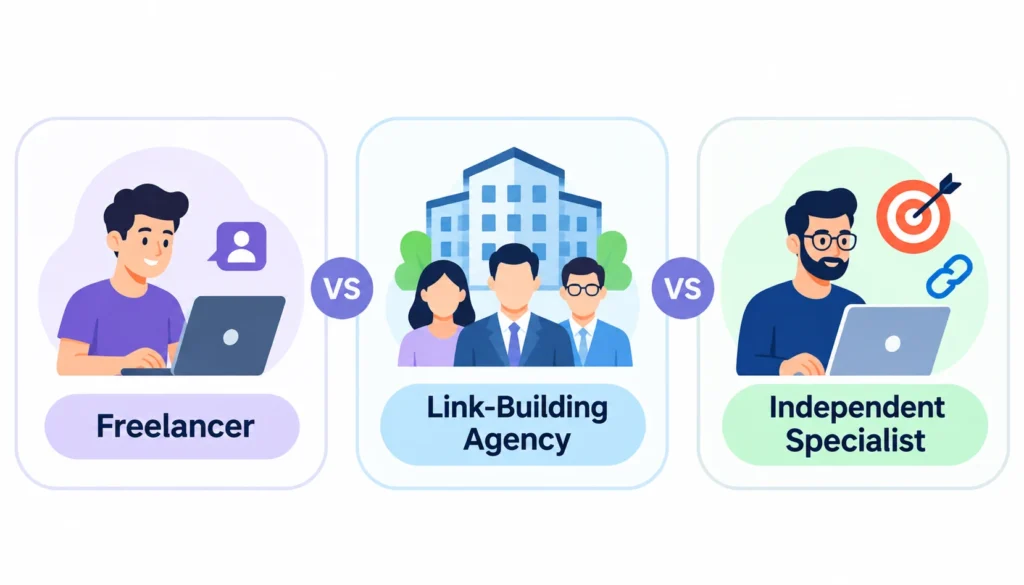
Which model fits depends on your budget, the size of the campaign, and how much control you want.
1. Hiring a Freelance Link Builder
Pros: direct communication, flexible terms, often lower cost.
Cons: limited capacity, and quality depends on one person.
Best for: small campaigns and test projects.
2. Hiring a Link-Building Agency
Pros: a team, set processes, and room to scale.
Cons: usually higher cost, and you may not talk to the person doing the work.
Best for: larger campaigns and companies that need steady volume.
3. Working with Independent Link-Building Specialists
Pros: deep focus on a narrow niche or method, direct contact, strong publisher relationships.
Cons: harder to find, and may be fully booked.
Best for: industries where relationships and expertise matter most.
4. Which Option Should You Choose?
| Factor | Freelancer | Agency | Independent Specialist |
| Pricing | Varies | Usually higher | Varies |
| Flexibility | High | Moderate | High |
| Scalability | Limited to one person’s capacity | Higher | Depends on their network |
| Communication | Direct | Often through an account manager | Usually direct |
| Specialization | Varies | Depends on the team | Often specialized |
| Best for | Smaller campaigns | Large campaigns | Niche-specific campaigns |
If you are unsure, start with a freelancer or specialist on a small test. Move to an agency once you know what you need at scale.
Questions to Ask Before Hiring a Link Builder
Use these in a short call. Listen for specific, confident answers.
Experience
- Which industries have you worked in?
- Can you share past campaigns with live links?
- Have you worked in my niche before?
Link quality
- How do you decide whether a site is worth a placement?
- Do you check organic traffic and not just DR?
- How do you spot private blog networks?
- Can I approve sites before anything is published?
Outreach
- Is your outreach manual personalized?
- How do you find relevant publishers?
- What happens when an editor says no?
Reporting
- Will I get live URLs for every link?
- What do you report, and how often?
Pricing and deliverables
- What exactly is included in the price?
- Is content creation part of it?
- What happens if a link is removed?
What a Good Answer Sounds Like
Say you ask, “How do you decide a site is worth a placement?” A weak answer is, “We only use DR 50+ sites.” A strong answer is, “We check that the site covers your topic, gets real organic traffic, has a clean outbound link profile, and publishes edited content. DR is only one of several checks, and we send you the list before we pitch.”
The second answer shows a process. The first shows a sales line.
Red Flags to Watch for When Hiring Link Builders
1. Guaranteed Google Rankings
No one controls Google’s results. Any provider who guarantees a specific ranking or a fixed traffic jump is either guessing or misleading you.
2. Extremely Cheap Backlinks
Good outreach takes time, research, and often content. If the price looks too low for that effort, the links usually come from bulk networks or low-quality sites.
3. No Verifiable Backlink Portfolio
If they can’t show live examples, you can’t judge their work. Screenshots alone are easy to fake.
4. Heavy Reliance on PBNs and Link Farms
A private blog network (PBN) is a group of sites created mainly to pass links. They often look alike, share hosting or design, and link out to unrelated topics. Wikipedia’s page on spamdexing explains how these kinds of schemes work and why search engines fight them.
5. Manipulated DR and DA Metrics
Some sites inflate scores with short-term tricks. A high number with no real traffic is a classic sign. Always pair metrics with a manual check.
6. Automated and Generic Outreach
Mass emails and robotic follow-ups signal low effort. They also damage relationships with publishers that you may want later.
7. No Transparency About Publisher Websites
If a provider hides which sites they use, you can’t check quality. That secrecy often protects a weak network.
8. No Clear Contract or Reporting Process
You need written scope, deliverables, and a reporting schedule. Without them, there is nothing to hold anyone to.
9. Understand Google’s Link Spam Rules
This part is easy to skip, and it shouldn’t be. Google’s spam policies treat buying or selling links to pass ranking credit, excessive link exchanges, and automated link schemes as link spam. Google also advises that paid or sponsored links be marked with rel=”sponsored” or rel=”nofollow”, as explained in its guide to qualifying outbound links.
So be honest about what you’re buying. A paid placement that isn’t marked correctly can carry risk. Earned editorial links, where a site links to you because your content deserves it, are the safest path.
How Much Does It Cost to Hire a Reliable Link Builder?
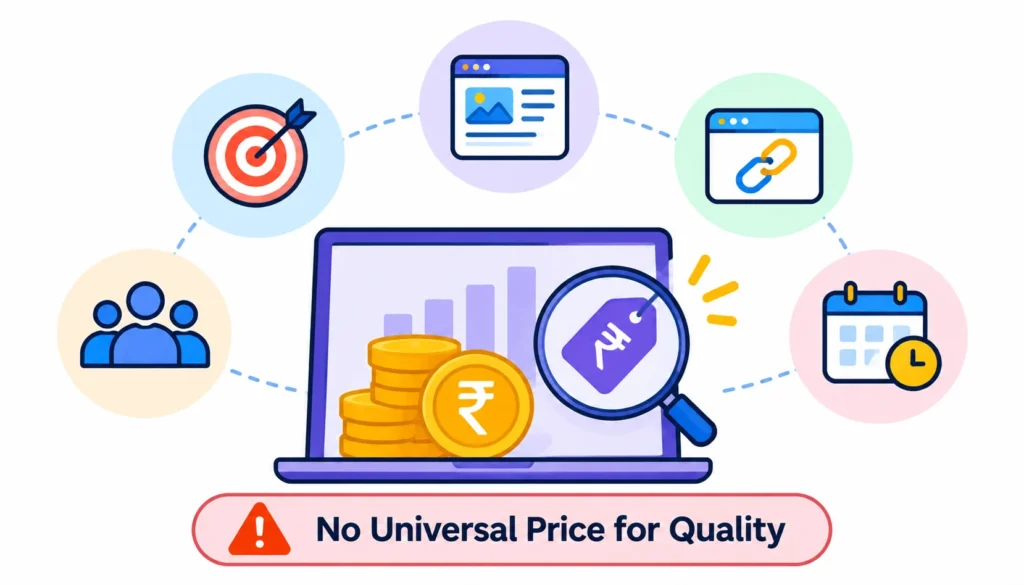
There is no universal price that guarantees quality, so be cautious about anyone quoting one.
Factors That Influence Link-Building Pricing
- How competitive your niche is
- The quality and traffic of target sites
- The publisher relationships involved
- How much outreach effort is needed
- Whether content is written for you
- The type of placement (guest post, niche edit, digital PR)
- Reporting and account management
Freelancer vs. Agency Pricing
Freelancers often cost less because they have fewer overheads. Agencies usually charge more because you also pay for process, management, and capacity. Neither is automatically better. Compare what is included, not just the headline number.
How to Tell If a Service Is Worth the Cost
Ask yourself:
- Are the sites truly relevant to my business?
- Could these links send real visitors?
- Is the content good enough to be proud of?
- Will the relationships help me beyond this one campaign?
Why the Cheapest Service Isn’t Always the Best Choice
Cheap links that get removed, ignored, or penalized cost more in the end. You pay once for the link and again to fix the damage. A smaller number of relevant links is almost always a better use of budget.
Best Tools to Help You Evaluate Link Builders
You can check most claims yourself with a few tools. Many offer free tiers or trials.
| Tool | Primary Purpose | Best Use |
| Ahrefs | Backlink analysis | Reviewing a site’s referring domains and outbound links |
| Semrush | SEO research | Checking organic traffic trends |
| Moz Pro | Domain analysis | Looking at Domain Authority as a rough signal |
| Majestic | Link analysis | Viewing Trust Flow and Citation Flow |
| Hunter.io | Email research | Finding and verifying contacts |
| Pitchbox | Outreach management | Running and tracking campaigns |
| BuzzStream | Relationship management | Organizing publisher conversations |
| Google Search Console | Your own site’s data | Monitoring links pointing to your site |
Remember that each tool has its own database and scoring. Expect the numbers to differ between them, and focus on the overall picture.
How to Choose the Right Link Builder for Your Business
Follow these eight steps.
- Define your goals. Decide what you want: more relevant links, referral traffic, brand visibility, or support for specific pages.
- Shortlist niche-specific professionals. Use two or three discovery channels and aim for three to five candidates.
- Review their portfolios. Look for relevant work and real examples, not vague claims.
- Verify previous backlinks. Open the live links and run the site checks above.
- Interview your shortlist. Use the questions in this guide and compare answers.
- Compare pricing and deliverables. Make sure you are comparing the same things.
- Start with a small test campaign. Agree on a small scope, such as a handful of placements, with site approval on your side.
- Monitor results and decide. Judge the test on link quality and communication, then scale up if it goes well.
A Simple Scorecard You Can Use
To compare candidates fairly, score each one out of 100 using these weights. This is a suggested framework, not an industry standard, so adjust it to your needs.
| Criteria | Weight |
| Backlink quality | 25% |
| Niche expertise | 20% |
| Outreach methodology | 15% |
| Portfolio and experience | 15% |
| Reporting transparency | 10% |
| Pricing transparency | 10% |
| Communication | 5% |
| Total | 100% |
Quick Hiring Checklist
- [ ] Live examples checked by me, not just screenshots
- [ ] Experience in my niche or a close one
- [ ] Clear site selection process
- [ ] I can approve sites before placement
- [ ] Manual, personalized outreach
- [ ] Full reporting with URLs, anchors, and dates
- [ ] Transparent pricing and written scope
- [ ] No ranking guarantees
- [ ] Clear approach to Google’s link policies
How to Measure a Link Builder’s Performance
Hiring a link builder is only the first step. You also need to evaluate whether their work is delivering meaningful results for your website. Instead of judging performance by the number of backlinks acquired, focus on the quality, relevance, and long-term value of those links. The following metrics can help you assess their performance:
- Relevant Referring Domains: Track how many unique websites link to your content and whether those websites are relevant to your industry. A backlink from a website that regularly publishes content related to your niche is generally more valuable than one from an unrelated website.
- Referral Traffic: Check whether backlinks bring actual visitors to your website. Use Google Analytics 4 to identify referral traffic sources and understand how visitors arriving through those links interact with your content. Look at metrics such as engaged sessions, page views, and conversions to evaluate their potential value.
- Link Retention: Monitor whether acquired backlinks remain live over time. Some publishers may remove links, update articles, or delete pages after publication. Review your backlink profile periodically to identify lost links and ask your link builder to investigate unexpected removals. Maintaining a consistent backlink management process also helps you track link status, identify changes, and keep your backlink records organized.
- Placement Quality: Evaluate the actual page where your backlink appears. Check whether the content is relevant to your niche, whether the link fits naturally within the article, and whether the surrounding content provides useful context. Also, review the website’s editorial standards and the link’s attributes, such as rel=”sponsored” or rel=”nofollow” where applicable.
- Reporting Transparency: A reliable link builder should provide clear and consistent reports containing live backlink URLs, referring domain details, target pages, anchor text, placement dates, and link attributes. Reports should arrive on schedule and make it easy to verify every completed placement.
- Organic Performance Trends: Monitor impressions, clicks, keyword rankings, and organic traffic for the pages targeted by the link-building campaign. Google Search Console can help you understand how those pages perform in search results over time. Compare performance before and after the campaign, while considering other SEO activities and website changes.
Remember that backlinks are only one of many factors influencing search performance. Rankings may take months to change, and improvements can also result from content updates, technical SEO improvements, or changes in search demand. A reliable link builder should explain their contribution honestly rather than claiming responsibility for every increase in traffic or rankings.
How to Build a Long-Term Relationship with a Reliable Link Builder
Once you find someone good, treat them like a partner.
- Set clear expectations: agree on goals, scope, and what “good” looks like.
- Communicate often: a short monthly call beats long silences.
- Share quality standards: give them your rules on relevance, traffic, and topics to avoid.
- Review reports together: look at wins, misses, and what to change.
- Give feedback quickly: tell them which placements you loved and which you didn’t.
The better they understand your business, the better their pitches become.
Frequently Asked Questions About Finding Reliable Link Builders
How do I find a reliable link builder?
Use referrals, LinkedIn, SEO communities, and freelance platforms. Then verify their live backlink examples yourself, interview them, and run a small test campaign before committing.
Where can I hire professional link builders?
You can hire them through LinkedIn, SEO communities, freelance marketplaces such as Upwork, specialist agencies, and referrals from other SEO professionals.
What makes a link builder trustworthy?
Transparency. They show live examples, explain their process, let you approve sites, report in detail, and avoid ranking guarantees.
How much does a professional link builder charge?
It varies widely. Pricing depends on your niche, site quality, content needs, and the type of placement. Compare scope and quality rather than chasing the lowest price.
Should I hire a freelancer or an agency for link building?
Choose a freelancer or specialist for small, focused, or niche campaigns. Choose an agency when you need larger volume, a team, and structured reporting.
How do I check whether a link builder provides quality backlinks?
Open their live links and check each site for topical relevance, real organic traffic, a natural link profile, clean outbound links, and good content.
Can hiring the wrong link builder hurt my website?
Yes. Link schemes, PBNs, and unmarked paid links can go against Google’s spam policies and may lead to lost visibility. Choosing carefully lowers that risk.
How long does it take to see results from link building?
It often takes a few months, and results depend on competition, content, and your site’s starting point. Be careful with anyone who promises fast, guaranteed results.
What is the difference between a link builder and an SEO agency?
A link builder focuses on earning backlinks. An SEO agency usually covers more, such as technical SEO, content, and strategy, and may offer link building as one service.
Is niche-specific link building better than general link building?
Usually, yes. Relevant links come from sites your audience already reads, and a niche specialist knows which sites those are.
Final Thoughts
Knowing how to find reliable link builders in your niche comes down to a simple habit: verify before you trust. Look for industry knowledge, live proof, clear reporting, and honest methods that respect Google’s rules.
Don’t chase the biggest numbers or the lowest price. Check the sites, ask the hard questions, and start with a small test. Once you find someone who passes, hold on to them, because good link builders are hard to replace.