

A link building network is a group of relevant website owners, publishers, bloggers, and SEO professionals who keep professional relationships to find content collaboration and backlink opportunities. A strong network focuses on relevance, editorial quality, transparency, and long-term partnerships, not on collecting as many links as possible.
Most people treat link building like a series of cold pitches. They find a site, send an email, hope for a reply, and start again the next week. It works, but it is slow, and every campaign starts from zero.
A better approach is to build a network of people who already know you and trust your work. When you need a link opportunity, you are not a stranger in someone’s inbox. This guide shows you how to build a strong link building network, step by step, and how to keep it healthy over time.
What Is a Link Building Network?
In plain English, a link building network is your list of real relationships with people who run or write for relevant websites. Some are editors. Some are bloggers. Some are SEO professionals or agency owners who swap leads and ideas.
Understanding what a link building network is can help you identify the right partners, develop meaningful industry relationships, and discover relevant backlink opportunities.
The value is not in any single link. The value is in access. A good network means faster replies, better opportunities, and fewer wasted emails.
1. How a Link Building Network Works
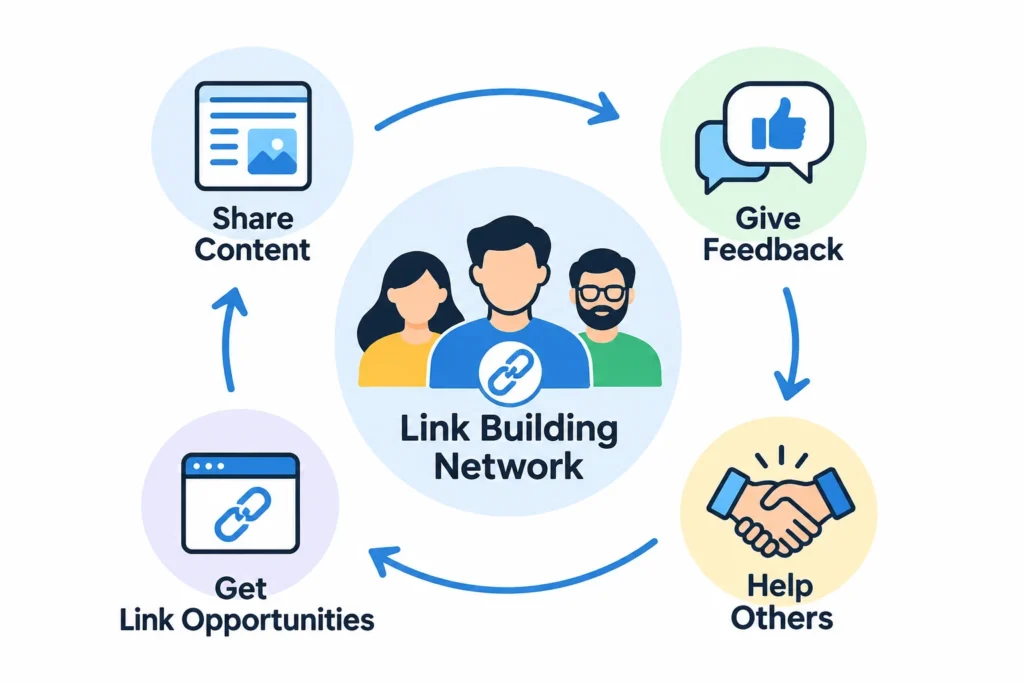
Think of it like a professional circle. You share useful content, give feedback, and help others when you can. Over time, people think of you when a relevant opportunity comes up.
A typical flow looks like this:
- You find relevant publishers and contacts.
- You introduce yourself and offer something useful.
- You build trust through good work.
- Collaborations, such as guest posts or expert quotes, happen naturally.
- You track each relationship and keep it active.
2. Link Building Network vs. Private Blog Network (PBN)
This is an important difference, and many beginners mix the two up.
A link building network is made of independent people and sites. You do not own or control them. Links appear because the content is useful and relevant.
A private blog network is a group of sites someone controls to pass links to a “money site” and influence rankings. Google treats link schemes designed to manipulate rankings as a violation of its spam policies. A relationship-based network is a different thing entirely. Keep it that way.
3. Who Should Be in Your Network?
Your network can include:
- Website owners in your niche
- Bloggers and independent writers
- Editors and publishers
- SEO professionals and consultants
- Digital marketing agencies
- Content marketers and PR people
You do not need all of them. Start with the people closest to your topic.
Why Is Building a Strong Link Building Network Important?
Cold outreach has a ceiling. A network raises it.
You get access to relevant opportunities. Editors who know you are more likely to read your pitch and reply.
You save time. Once you have a trusted list, you stop researching from scratch on every project.
You find guest posting opportunities earlier. People in your circle often mention upcoming needs before they are public.
You gain referral traffic and visibility. Good links send real visitors, not just ranking signals.
You build industry connections. These often lead to podcasts, interviews, and partnerships that go well beyond links.
You get consistency. Link building results are easier to repeat when relationships do the heavy lifting.
How to Build a Strong Link Building Network from Scratch
Here is the process I recommend for beginners. Follow the steps in order. Each one builds on the last.
Step 1: Identify Your Niche and Link Building Goals
Start narrow. A network of 30 people in one niche is more useful than 300 random contacts.
Write down four things:
- Your industry and sub-topics
- Your target audience
- What you want from links (rankings, traffic, brand awareness, or all three)
- The types of sites that fit, such as industry blogs, news sites, and resource hubs
Say you run a project management software blog. Your target sites are productivity blogs, startup publications, remote work sites, and business software reviewers. That list gives you direction.
Step 2: Find Relevant Website Owners and Publishers
Now you need names. Use several methods, because each one finds different people.
Use Google search operators. Searches like “write for us” project management or “contribute” productivity blog surface sites that accept outside content. Add your topic to find relevant ones.
Look at competitor backlink profiles. Tools such as Ahrefs or Semrush show which sites link to your competitors. If a site is linked to three competitors, it may be open to linking to you too, if you have something worth linking to.
Read industry blogs and publications. Notice who writes, who edits, and who gets quoted. Those names are your future contacts.
Spot guest posting sites. Look for sites that publish contributor articles and have visible editorial standards.
Check relevant business websites. Think suppliers, partners, event organizers, and associations connected to your topic.
Step 3: Join Link Building and SEO Communities
Communities are where relationships begin. The goal is to be helpful first. Joining a dedicated link building community can also help you connect with experienced SEO professionals, discover relevant collaboration opportunities, and develop long-term industry relationships.
LinkedIn. Follow SEO practitioners, comment on their posts, and join groups related to SEO and digital marketing. A thoughtful comment does more than a connection request with no message.
Reddit. Communities like SEO and bigseo are active places to learn what other practitioners are seeing. Read the rules first. Both communities dislike promotion, so share knowledge, not links.
Facebook groups. Many SEO and marketing groups exist. Quality varies a lot, so judge each one by how useful the discussions are.
Slack and Discord. Several SEO and marketing communities run private channels where people trade advice. Look for ones with active moderation.
Events and meetups. Conferences, webinars, and local meetups give you a real conversation, which is often worth ten emails.
A simple rule: spend a few weeks giving before you ask. Answer questions, share a useful resource, and be consistent.
Step 4: Create a Database of Potential Link Building Partners
Without a system, your network will fall apart by month three. A simple spreadsheet is enough to start. Google Sheets works well.
Here is a sample structure:
| Website | Niche | DR | Organic Traffic | Contact | Collaboration | Status |
| Example A | SaaS | 55 | 12K | Editor | Guest post | Warm |
| Example B | Technology | 48 | 8K | Owner | Link insertion | Contacted |
| Example C | Marketing | 62 | 20K | Manager | Content collaboration | Active |
These are illustrative examples, not real website metrics.
Also add columns for contact email, date of last contact, previous placements, and notes. The notes column is more valuable than it sounds. Write down that an editor likes data-driven posts or prefers short pitches.
Step 5: Evaluate the Quality of Potential Partners
Not every site is worth your time. A weak partner can hurt you more than no partner at all.
Use this checklist before reaching out:
- Topical relevance. Does the site cover your subject regularly? This matters most.
- Organic traffic and trends. A site with steady or growing traffic is a better sign than one with a sudden drop.
- Backlink profile. Look for natural links from real sites, not a flood of unrelated ones.
- Content quality. Is it original, useful, and well edited?
- Editorial standards. Does it have an About page, real authors, and publishing guidelines?
- Suspicious patterns. Watch for obvious “sponsored” content on every page, unrelated topics, or heavy outbound linking to casino, loan, or pill sites.
One caution: metrics like Domain Rating (Ahrefs) and Domain Authority (Moz) are third-party scores. Google does not use them as ranking factors. A high DR does not make a site trustworthy, and a low DR does not make it bad. Use them as quick filters, never as the final decision.
Step 6: Start Building Relationships Through Personalized Outreach
This is where most people go wrong. They send the same email to 200 people.
Find the right person. Look for the editor, content manager, or site owner. Check the About or Contact page, the author bios, and LinkedIn.
Write a personal email. Mention a specific article of theirs. Say why it was useful. Then explain what you can offer.
Show the value. Tell them what is in it for them: a fresh topic, original data, or an expert quote their readers will like.
Follow up once or twice. Wait about a week. Keep it short and polite. If there is no reply, move on.
Build trust first. Share their content, comment on their posts, or send a useful tip before you ask for anything.
Here is a short example:
Subject: Idea for your remote work series
Hi Priya,
I read your piece on async communication last week. The point about meeting-free days was especially practical.
I work on a project management blog, and I put together a short data piece on how teams track work across time zones. I think it could fit your remote work series. Would you like me to send a short outline?
Either way, thanks for the great articles.
Sam
Notice what the email does not do. It does not ask for a link. It offers something and lets the editor decide.
Step 7: Establish Mutually Beneficial Collaborations
Once you have a relationship, there are several ways to work together:
- Guest posts. You write a useful article for their audience.
- Editorial contributions. You provide an expert quote, a data point, or a short comment for a story.
- Resource page collaborations. If you have a genuinely helpful resource, suggest it to a site that curates similar ones.
- Content partnerships. Co-create a report, webinar, or study.
- Industry networking. Join the same events, panels, or podcasts.
Understanding Link Exchanges and Their Risks
Link exchanges are tempting, but handle them carefully. Google’s spam policies list excessive link exchanges, where the main purpose is cross-linking to influence rankings, as a form of link spam.
A natural mention between two relevant sites is fine. A pattern of “you link to me, I link to you” across dozens of sites is not. Also, if a link is paid for or exchanged for goods or services, Google recommends marking it with rel=”sponsored”, and rel=”ugc” for user-generated links.
Here is a quick comparison:
| Factor | Guest Posting | Link Exchange |
| Main value | Useful content for the publisher’s audience | Mutual linking between two sites |
| Risk level | Lower, if the content is relevant and the links are editorial | Higher, especially if done at scale |
| Best practice | Write for readers first | Keep it rare, natural, and relevant |
Best Strategies for Expanding Your Link Building Network
Once your first group of contacts is active, grow it carefully.
Go deeper in your niche. Look for the sites that sit one step away from your main topic.
Work with SEO agencies and marketing professionals. They often know publishers you do not.
Build relationships with bloggers and editors. A good writer today is often an editor tomorrow.
Create link-worthy resources. Original research, free tools, and clear guides give people a reason to reach out to you.
Use competitor backlink analysis. Every site that linked to a competitor is a possible new contact.
Stay active in communities. Share what you learn. Visibility brings inbound introductions.
Look after existing relationships. Send a thank-you after a placement. Share their work. Check in now and then without an agenda.
Best Tools for Finding and Managing Link Building Partners
You can do all of this with a spreadsheet, but tools save time as your network grows. Choosing the right backlink management tools can make it easier to track acquired links, monitor changes, organize backlink data, and manage ongoing SEO activities.
| Tool | Primary Purpose | Best For |
| Ahrefs | Backlink analysis | Competitor research |
| Semrush | Link prospecting and audits | Finding opportunities |
| Moz | SEO metrics | Quick website evaluation |
| Hunter.io | Email discovery | Finding contacts |
| BuzzStream | Relationship management | Outreach tracking |
| Pitchbox | Outreach management | Running campaigns |
| Google Sheets | Database management | Organizing partners |
| Google Search Console | Search performance and link data for your own site | Checking which sites link to you |
You do not need all of these. Many professionals start with Google Sheets plus one research tool and add others only when a real need appears.
How to Manage and Maintain a Link Building Network
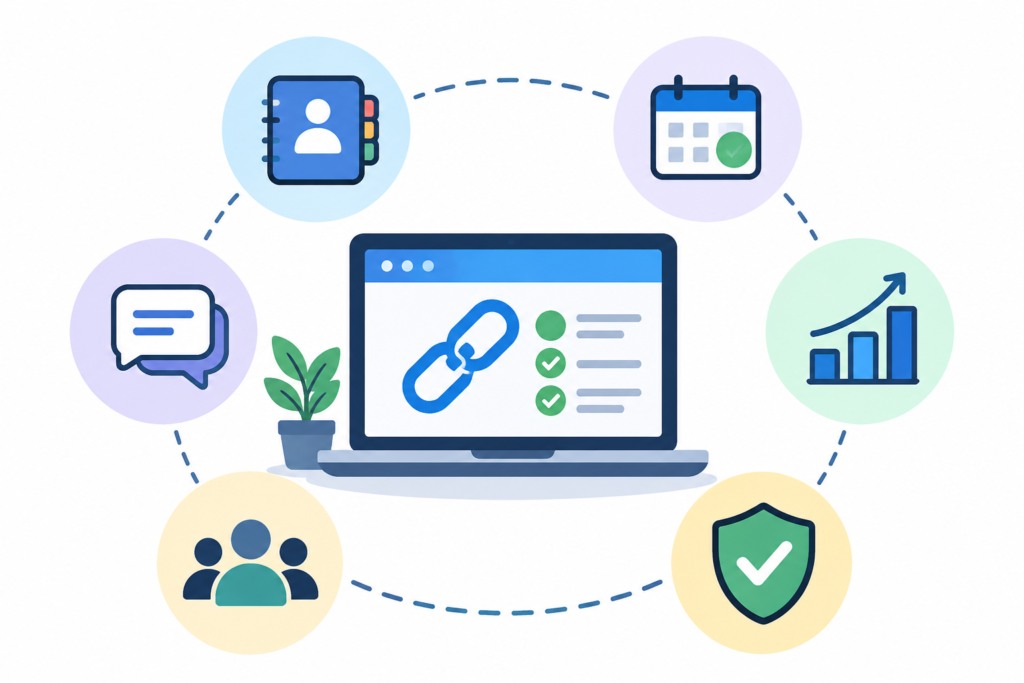
Building the network is half the job. Maintaining it is the other half. Effective backlink management helps you monitor acquired links, evaluate their quality, identify lost backlinks, and maintain a healthy backlink profile over time.
Organize by niche and quality. Group your contacts so you can find the right person quickly.
Track every conversation. Note when you last spoke, what you discussed, and what you promised.
Record published backlinks. Keep the URL, anchor text, date, and the page where it appears.
Monitor lost and broken links. Check your links on a schedule. If a link breaks, reach out politely and help fix it.
Stay in touch. A short message every few months keeps a contact warm.
Review quality regularly. A site that was good last year may have changed. Check traffic, content, and outbound links again.
Remove inactive or irrelevant contacts. A smaller list you actually use beats a long one you ignore.
A simple monthly checklist:
- Update statuses in your database
- Check all recent links are live
- Send two or three relationship-building messages
- Review one or two partner sites for quality changes
- Add new prospects from your research
Common Link Building Network Mistakes to Avoid
Chasing DR over relevance. A relevant mid-level site is almost always better than an unrelated high-score one.
Working with spammy sites. If a site accepts anything for a fee, so do thousands of others. Skip it.
Sending generic emails. Editors can spot a template instantly.
Building too many weak relationships. Depth matters more than numbers.
Doing too many reciprocal exchanges. Keep them rare and natural.
Ignoring editorial guidelines. Read them before you pitch. It shows respect and saves everyone time.
Not monitoring links. Pages get deleted and redesigned. Check your placements.
Relying on a single method. Mix guest posts, expert quotes, resource pages, and content partnerships.
How to Measure the Success of Your Link Building Network
Do not judge your network by link count alone. Use a small set of clear metrics.
| Metric | What It Measures |
| Relevant referring domains | Growth in related sites linking to you |
| Referral traffic | Visitors who come from external sites |
| Outreach response rate | Share of prospects who reply |
| Placement success rate | Share of outreach that leads to a placement |
| Partner retention | Contacts who keep working with you |
| Organic performance | Changes in rankings and organic traffic over time |
Keep in mind that rankings depend on many factors. Links are one of them, so avoid crediting every change to your network.
Link Building Network vs. Traditional Link Building
These two approaches work well together. Traditional link building focuses on individual campaigns. A network focuses on ongoing relationships.
| Factor | Traditional Link Building | Link Building Network |
| Approach | Individual link acquisition | Relationship-driven opportunities |
| Main focus | Getting a backlink | Partnerships and collaboration |
| Outreach | Campaign-based | Ongoing communication |
| Management | Prospect lists | Relationship tracking |
| Scalability | Depends on repeated prospecting | Grows with established relationships |
| Long-term value | Tied to the links won | Includes future opportunities |
Most strong programs use both. Campaigns bring in new contacts. The network turns some of them into lasting partners.
How to Scale Your Link Building Network Without Compromising Quality
Expanding a link building network can create more opportunities for collaboration, but growth should never come at the expense of website quality and relevance. As your network grows, maintaining consistent standards, organized processes, and genuine relationships becomes increasingly important. Here are six practical ways to scale your network while keeping quality intact.
1. Start Small with Reliable Partners
Begin by connecting with a handful of trustworthy website owners, bloggers, publishers, and SEO professionals within your industry.
Focus on partners who publish relevant content, maintain good editorial standards, and have an audience that aligns with your target market. Building strong relationships with a small group first helps you understand what works before expanding your network.
2. Create a Repeatable Link Building Process
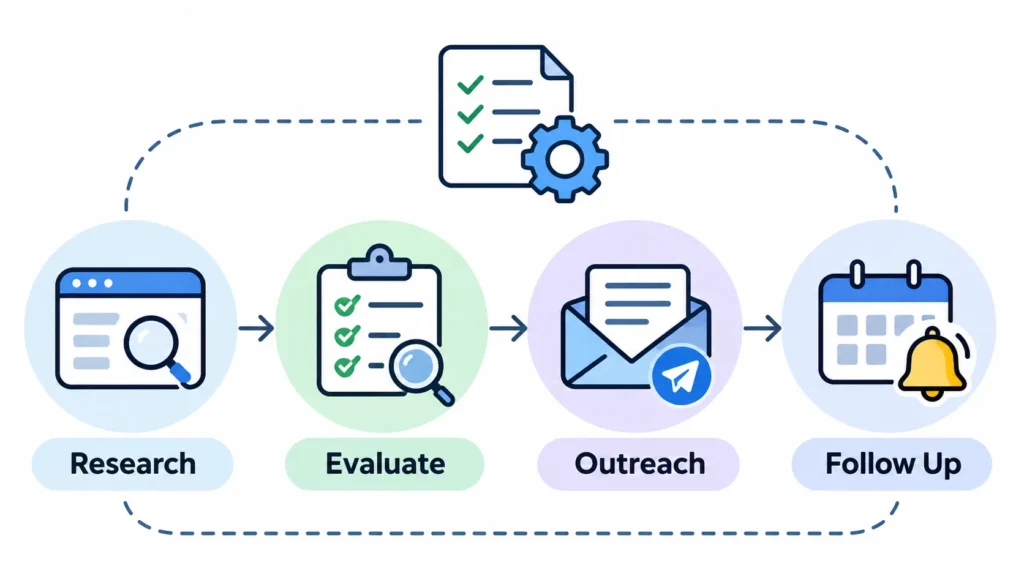
Develop a consistent workflow for researching websites, evaluating potential partners, sending outreach emails, and following up on conversations.
Document each step so that you or your team can follow the same quality standards throughout the process. A repeatable system reduces manual errors, saves time, and makes it easier to manage a growing number of partnerships.
3. Build Separate Lists Based on Topics and Niches
Organize your potential link building partners into categories based on their industries, website topics, and content focus. For example, create separate lists for SaaS, technology, digital marketing, finance, and business websites.
This makes prospecting more organized and helps you approach publishers with relevant collaboration ideas instead of sending generic requests to everyone.
4. Use Tools to Manage Repetitive Tasks
As your network expands, manually tracking every contact, email conversation, and published backlink can become difficult. Tools such as Ahrefs, Semrush, BuzzStream, and Google Sheets can help you research websites, organize contact details, monitor opportunities, and schedule follow-ups.
However, use automation mainly for administrative tasks. Keep outreach messages personalized and write them according to each publisher’s website and audience.
5. Evaluate Website Quality Before Every Collaboration
Never lower your evaluation standards just to increase the number of link building partners. Before collaborating, review each website’s topical relevance, organic traffic trends, content quality, backlink profile, and publishing practices.
Check these factors every time you consider a new opportunity, even when the website comes through an existing contact. Consistent quality checks help you avoid irrelevant, spammy, or potentially harmful link placements.
6. Prioritize Long-Term Relationships Over Link Volume
A successful link building network depends on meaningful professional relationships, not the number of contacts in your database. Stay connected with reliable publishers, share useful content ideas, respect editorial guidelines, and maintain transparent communication. Ten relevant and dependable partners can create more valuable opportunities over time than hundreds of unresponsive or low-quality contacts.
Ultimately, scaling a link building network is about improving your process while maintaining the standards that made it successful in the first place. Focus on relevant partnerships, organized outreach, consistent website evaluations, and long-term collaboration rather than chasing backlink numbers.
Frequently Asked Questions About Building a Link Building Network
What is a link building network?
It is a group of relevant website owners, publishers, bloggers, and SEO professionals you maintain real relationships with, so you can find collaboration and backlink opportunities more easily.
How do you build a strong link building network?
Pick a niche, find relevant publishers, join communities, organize contacts in a database, evaluate site quality, send personalized outreach, and keep relationships active.
Where can you find link building partners?
Good places include LinkedIn, Reddit communities such as r/SEO, SEO-focused Slack and Discord groups, industry events, competitor backlink reports, and niche blogs.
Are link exchanges safe for SEO?
Not always. Google’s spam policies treat excessive link exchanges as link spam. Occasional, natural references between relevant sites are different from large-scale swapping. Paid or compensated links should be marked with rel=”sponsored”.
How many link building partners should you have?
There is no fixed number. Start with 10 to 20 relevant, responsive contacts and grow only as fast as you can manage them well.
What tools help manage a link building network?
Google Sheets is enough to start. Ahrefs and Semrush help with research, Hunter.io helps with contact discovery, and BuzzStream or Pitchbox help manage outreach.
What is the difference between a link building network and a PBN?
A link building network is a set of independent relationships. A PBN is a group of sites controlled by one party to pass links and influence rankings, which can violate Google’s spam policies.
How do you evaluate a potential link building partner?
Check topical relevance, traffic trends, content quality, editorial standards, backlink profile, and outbound link patterns. Treat DR and DA as rough filters only.
Conclusion
A strong link building network is built on relevance, trust, and consistency. You find the right people, give value first, and keep the relationship going long after the first link is live.
If you want to build a strong link building network, start small. Choose one niche, find 20 relevant publishers, join two communities, and set up a simple spreadsheet. Evaluate every site honestly, personalize every message, and avoid shortcuts that look like manipulation.
Over time, those relationships become one of the most reliable assets in your SEO work. You will spend less time chasing strangers and more time working with people who already know what you do well.