
Most link-building campaigns don’t fail because of bad outreach. They fail because the people involved stop trusting each other.
A client gets a spreadsheet full of domains they have never heard of. An agency gets a vague “just make it work” brief. A publisher finds out, months later, that a “guest post” was actually a paid placement. Each of these small gaps chips away at the relationship.
This guide shows you how to maintain trust and transparency in link building, whether you are the client, the agency, or the website owner. You will learn what to disclose, what to report, how to spot a trustworthy partner, and how to handle problems when they come up.
What Is Trust and Transparency in Link Building?
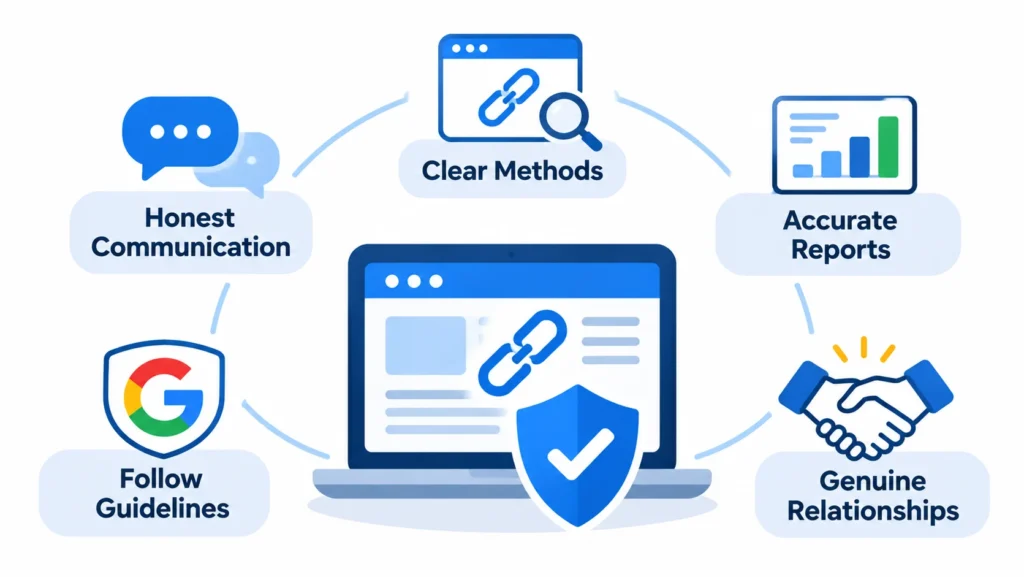
Trust and transparency in link building mean maintaining honest communication, disclosing link acquisition methods, sharing accurate campaign reports, following search engine guidelines, and building genuine relationships with clients and website publishers.
In plain English: everyone involved knows what is being done, where links are going, what it costs, and whether it worked.
Understanding Transparency in Link-Building Campaigns
A backlink is a link from one website to another. Search engines treat the quantity, quality, and relevance of those links as one signal among many when judging a page.
Because links carry weight, they are also easy to misuse. Transparency is the habit of showing your work. That means sharing your methods, the sites you target, the placements you secure, and the money involved.
Why Trust Matters Between Clients, Agencies, and Publishers
Link building is a three-way relationship. The client pays for results, the agency does the work, and the publisher decides what appears on their site.
When trust is high, communication gets faster and expectations stay realistic. When it is low, everyone starts hiding things or double-checking everything, which slows the whole campaign down.
Key Principles of Transparent Link Building
Seven principles hold up across almost every campaign:
- Honesty: say what you are doing and what you cannot promise.
- Clear communication: share progress, delays, and setbacks early.
- Accountability: own mistakes and document decisions.
- Ethical practices: earn links through value, not tricks.
- Accurate reporting: report only links you have verified.
- Editorial independence: let publishers make their own content decisions.
- Mutual respect: treat every partner as a long-term relationship, not a one-time transaction.
Why Are Trust and Transparency Important in Link Building?
Transparency protects your money, your brand, and your search visibility. Here are the five biggest reasons.
1. Builds Strong Client-Agency Relationships
Most client frustration comes from not knowing what is happening. A short weekly note explaining who was contacted and what came back removes most of that anxiety.
Clear updates also make it easier for clients to give useful feedback early, before a month of work goes in the wrong direction.
2. Protects Brand Reputation
Your backlinks are public. If your brand appears on irrelevant, low-quality, or spammy sites, customers and journalists can see it.
Sites that exist only to sell links, often called link farms, are a common example. Knowing exactly where your links live lets you avoid them.
3. Encourages Ethical Link Acquisition
Google’s spam policies cover link spam, including buying or selling links to pass ranking credit. Teams that are open about how they earn links are far less likely to drift into those practices.
If a method cannot be explained to the client in a plain sentence, it deserves a second look.
4. Improves Campaign Accountability
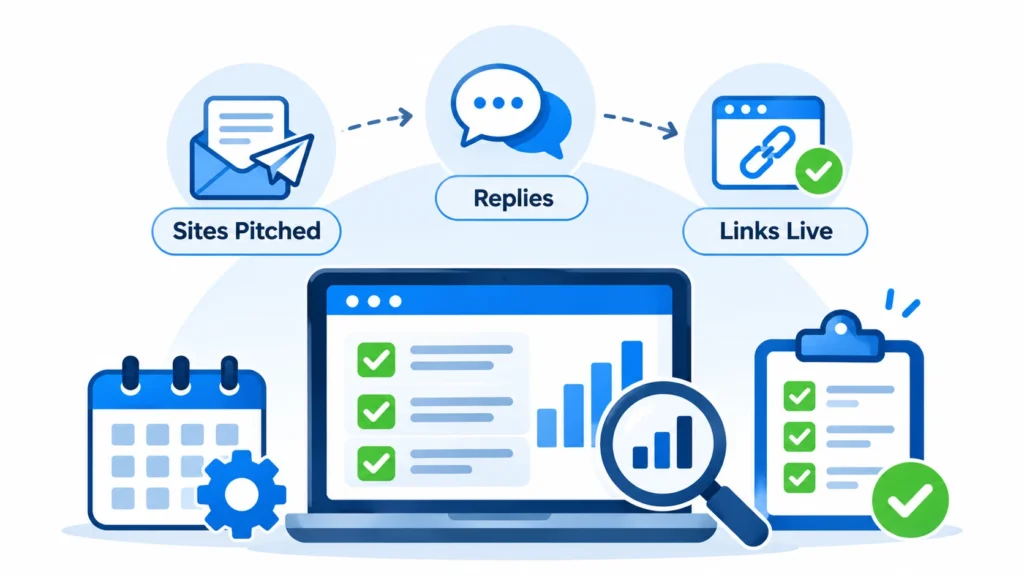
Documented work is easy to evaluate. If you know which sites were pitched, which replied, and which links went live, you can judge the campaign on facts instead of feelings.
5. Supports Long-Term Partnerships
A publisher who was treated honestly will answer your next email. An agency that reported a lost link honestly will keep the client for the next campaign.
One-off link swaps rarely build anything. Repeat relationships do.
How to Maintain Trust and Transparency in Link Building
The safest way to keep a campaign honest is to build transparency into every stage: before it starts, while it runs, and after links go live. Follow these eight steps in order.
1. Set Clear Expectations Before Starting a Campaign
Most disputes start with a fuzzy brief. Before any outreach begins, put the following in writing:
- The campaign goal, such as more referral traffic or stronger visibility for specific pages.
- A realistic timeline, including how long outreach and publishing usually take.
- The target pages the links should point to.
- Minimum quality rules, such as topical relevance and real audience traffic.
- Who approves what, and how fast.
- How often reports will arrive.
A one-page agreement covering these points saves weeks of back-and-forth later.
2. Explain Your Link-Building Strategy Clearly
Clients should know which methods you plan to use and why. Common approaches include:
- Guest posting: writing original articles for relevant sites.
- Digital PR: earning coverage through data, studies, or expert commentary.
- Resource page outreach: suggesting your content to pages that list useful resources.
- Link insertions: asking a publisher to add a link to an existing, relevant article.
- Content partnerships: collaborating with another brand on research, webinars, or interviews.
If an agency will not tell you which of these it uses, treat that as a warning sign.
3. Be Honest About Paid Link Placements
This is where many trust problems start, so it deserves care. Three separate ideas often get mixed up:
- Telling the client: Did money change hands for this placement? Was there a publishing fee? Was content creation included?
- Telling readers: Is the content sponsored, and is that clear to the person reading it? Rules vary by country and platform.
- Telling search engines: Is the link qualified correctly in the code?
On the third point, Google’s guidance on qualifying outbound links says to mark advertisements and paid placements with rel=”sponsored”. It also says nofollow was previously recommended for these links and is still acceptable, though sponsored is preferred. Links in comments and forum posts should use ugc.
In short, a paid placement should be disclosed to the client, labelled for readers where required, and qualified for search engines. These are three different jobs. Doing one does not cover the other two.
4. Share Website and Placement Details
Clients should never have to guess where their links live. For every placement, share the website domain, the article URL, the target page, the anchor text, where the link sits in the article, the publication date, and the link attribute.
Sharing this information is also a quality check. If an agency hesitates to share the domain, ask why.
5. Maintain Consistent Communication
Good updates are specific. They also include bad news.
| Vague update | Transparent update |
| We are working on your backlinks. | We contacted 25 relevant sites this week and received 6 positive replies. |
| Your backlinks are completed. | We secured 3 placements. Published URLs, target pages, anchors, and link attributes are attached. |
| Your SEO is improving. | Referral traffic rose this month, while keyword rankings stayed mostly flat. |
These examples are illustrative, not real campaign data. The point is the level of detail.
Also report delays, rejected pitches, and strategy changes as they happen. Silence is what clients remember.
6. Provide Accurate Backlink Reports
A report should list work that was actually completed and verified, not work that was promised or pending. The next major section covers exactly what to include.
7. Monitor Published Backlinks Regularly
Publishing a link is not the end. Pages get edited, moved, or deleted, and links go with them.
Check live links on a regular schedule and look for these changes:
- The link has been removed or the page is gone.
- The anchor text has changed.
- The link now points to a different URL.
- The link attribute has changed, for example to nofollow.
How often to check depends on campaign size. A small campaign may need a monthly check, while a large one may justify a weekly check. When something changes, contact the publisher politely and tell the client what you found.
8. Take Responsibility for Mistakes
Every campaign has errors: a wrong anchor, a missed deadline, a miscounted report. What matters is how fast and how plainly you say so.
A good correction has three parts: what went wrong, what you are doing about it, and when the client will see the fix. Leave out the excuses.
How to Build Trust With Link-Building Partners
Publishers are not vending machines. They are people running real sites with real audiences. Treating them that way is the difference between a one-time link and a lasting relationship.
1. Choose Relevant and Reputable Websites
Look for sites that cover your topic, serve a similar audience, and publish good content on a regular basis. Finding relevant website owners and publishers also helps you connect with the right people and establish meaningful link-building partnerships. A site with traffic numbers but no real readers is a poor partner, however good its metrics look.
2. Personalize Every Outreach Message
Mention a specific article, explain why your content fits, and say clearly who you work for. Avoid misleading subject lines and copy-paste templates. Publishers can spot a mass email in seconds.
3. Offer Mutual Value Instead of Focusing Only on Backlinks
Ask yourself what the publisher gains. Useful ideas include original data, expert quotes, a useful resource for their readers, a joint webinar, or an interview with a respected voice in the industry.
4. Respect Editorial Independence
The publisher decides what gets published. If they decline a link, change your wording, or add a sponsored or nofollow attribute, accept it and tell your client honestly.
Pushing back on editorial decisions rarely works and often ends the relationship.
5. Maintain Relationships After Link Placement
Send a thank-you note. Share how the article performed. Come back later with something useful, not another request. Partners who feel valued reply quickly the next time.
How to Identify a Trustworthy Link-Building Agency
A trustworthy agency is easy to recognize because it explains its work without being pushed. You can also learn how to identify reliable link builders by evaluating their experience, niche expertise, previous placements, and link acquisition methods. Use these six checks when comparing providers.
Community threads on SEO and bigseo are also useful places to see how practitioners talk about agency experiences, though treat any single opinion with caution.
1. Ask for a Clear Link-Building Strategy
A good agency can describe how it finds sites, how it pitches them, and what kind of content it creates. Vague promises like “proprietary outreach” with no detail are a red flag.
2. Review Previous Backlink Placements
Ask to see recent examples, then check them yourself. Look at:
- Whether the site is relevant to the client’s industry.
- Whether the content is genuinely useful.
- Where the link sits and how natural it looks.
- Which anchor text and link attribute were used.
- Whether the site appears to have a real audience.
3. Request Sample Backlink Reports
Ask for an anonymized report from a past client. If the report only shows counts and authority scores, it is too thin. You should be able to click through and verify each placement.
4. Check Whether the Agency Discloses Paid Placements
Ask directly: “Do any of your placements involve payment, and how do you handle link attributes?” A transparent agency answers without hesitation.
5. Avoid Agencies That Guarantee Rankings
No one outside Google controls rankings, and backlinks are only one of many factors. Anyone who guarantees a specific position or traffic number is promising something they cannot deliver.
6. Evaluate Communication and Accountability
Notice how quickly they reply before you sign. Ask how they handle lost links and reporting errors. The way an agency responds to a hard question in the sales stage usually predicts how it will respond to a problem later.
What Should a Transparent Link-Building Report Include?
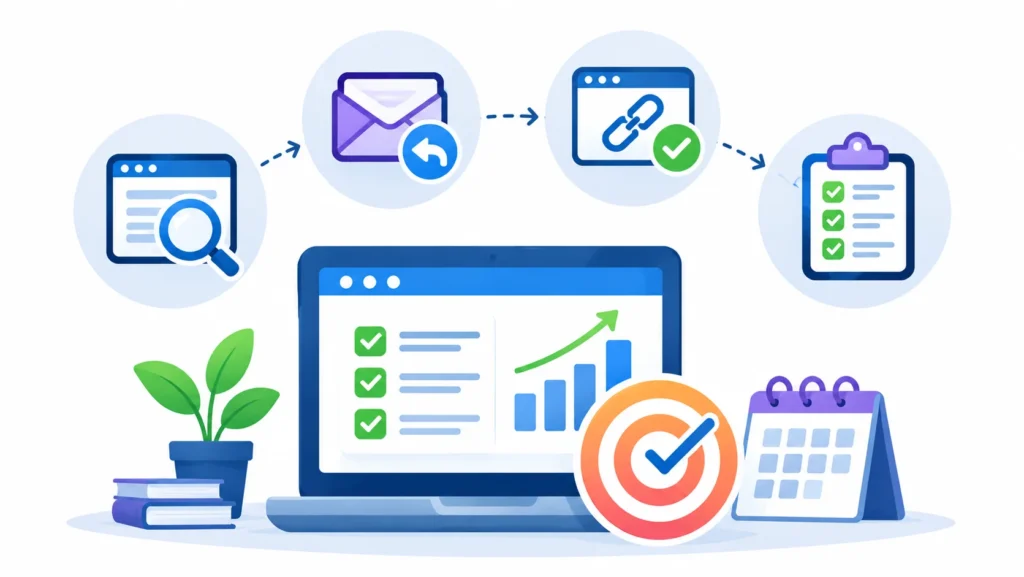
A transparent backlink report lets the client verify every placement without asking for extra information. It should list the linking website, published URL, target page, anchor text, link attribute, publication date, relevance notes, current status, and cost where applicable.
Essential Information in a Backlink Report
- Linking website: the domain where the link was placed.
- Published article URL: the exact page, so it can be checked.
- Target page: which page on the client’s site receives the link.
- Anchor text: the clickable words.
- Link attribute: follow, nofollow, sponsored, or ugc. A nofollow link tells search engines not to pass endorsement through it.
- Placement date: when it went live.
- Website relevance: a short note on why the site fits.
- Status: live, pending verification, or lost.
- Cost: where a placement involves a fee.
- Notes: follow-ups or open issues.
Sample Backlink Reporting Format
This table is an illustrative example, not actual campaign data.
| Linking Website | Published URL | Target URL | Anchor Text | Link Attribute | Status |
| Example Site A | Article URL | Target Page A | Relevant anchor | Sponsored | Live |
| Example Site B | Article URL | Target Page B | Brand anchor | Nofollow | Live |
| Example Site C | Article URL | Target Page C | Natural anchor | Follow | Pending verification |
How Often Should Agencies Share Backlink Reports?
Monthly is a common rhythm, but the right schedule depends on campaign size and client needs. A large, fast-moving campaign may justify short weekly updates, while a small one may only need a monthly summary. Agree on the schedule before the campaign starts.
How to Measure the Success of a Transparent Link-Building Campaign
Count outcomes that matter, and be honest about what a number can and cannot prove. Effective backlink management helps you organize acquired links, monitor their status, track referring domains, and identify links that need attention.
1. Monitor Referring Domains and Backlink Growth
Total backlinks and referring domains are not the same thing. Ten links from one site count as one referring domain. Unique referring domains usually say more about the spread of your link profile than a raw link count.
Tools such as Ahrefs, Semrush, Moz Link Explorer, and Majestic can show this, and Google Search Console helps you review the sites linking to you and spot manual actions.
2. Measure Referral Traffic
Google Analytics 4 can show visitors arriving from other websites. This tells you whether a link sends real people, not only whether it exists.
3. Track Target Keyword Performance
Watch rankings for the pages you promoted, but avoid crediting every movement to backlinks. Content updates, competitor changes, and algorithm updates all play a role. Say “rankings moved while links were built,” not “links caused the ranking.”
4. Evaluate Link Quality and Relevance
Check the editorial context, the topic match, the placement, and whether the link is still live. Treat Domain Authority and Domain Rating as rough third-party estimates, not guarantees of quality or ranking power.
5. Connect Link-Building Results to Business Outcomes
Look past the link count to qualified visitors, leads, conversions, brand mentions, and referral engagement. Those are the results clients actually pay for.
Common Transparency Mistakes to Avoid in Link Building
1. Hiding the Websites Where Links Are Published
Withholding domains stops the client from checking quality or spotting risk. It is the fastest way to lose trust.
2. Reporting Unverified Backlinks
Only report a link once you have opened the page and confirmed the link, anchor, and target. Listing a promised link as delivered is a serious breach of trust.
3. Overpromising Rankings and Traffic
Guarantees create expectations that cannot be met. Promise effort, process, and communication instead.
4. Ignoring Paid Placement Disclosure
Hiding payment from clients, or leaving a paid link unqualified, creates both relationship and policy risk. Google’s spam policies are the reference to check.
5. Using Website Metrics Without Context
A high authority score on a site that has nothing to do with your industry is not a good link. Always pair metrics with a human review.
6. Failing to Communicate Delays or Lost Links
Clients forgive slow months. They rarely forgive finding out about a problem on their own.
Transparent vs. Non-Transparent Link Building
| Transparent link building | Non-transparent link building |
| Shares placement details | Hides linking websites |
| Discloses paid placements | Conceals commercial arrangements |
| Provides accurate reports | Uses vague performance updates |
| Explains acquisition methods | Avoids discussing methods |
| Sets realistic expectations | Promises guaranteed rankings |
| Monitors live backlinks | Ignores lost or changed links |
| Encourages client feedback | Avoids accountability |
Practical Checklist for Maintaining Trust and Transparency in Link Building
Save this list and use it on every campaign.
Before Starting a Campaign
- Define campaign goals.
- Agree on target pages.
- Explain acquisition methods.
- Clarify budgets and costs.
- Establish quality requirements.
- Agree on reporting frequency.
During the Campaign
- Share outreach progress.
- Disclose paid placements.
- Document publisher responses.
- Communicate delays.
- Share placement details.
- Get approvals in writing.
After Link Placement
- Verify published URLs.
- Check anchor text.
- Confirm link attributes.
- Record publication dates.
- Monitor backlink status.
- Share campaign reports.
- Resolve placement issues.
Frequently Asked Questions About Trust and Transparency in Link Building
What does transparency mean in link building?
It means being open about methods, costs, placements, and results so clients and publishers can verify what is happening.
Why is trust important in link building?
Links depend on relationships between clients, agencies, and publishers. Trust keeps communication honest and expectations realistic.
How can you identify a trustworthy link-building agency?
Look for clear methods, verifiable sample reports, honest disclosure of paid placements, no ranking guarantees, and responsive communication.
What should a link-building agency report to clients?
Published URLs, target pages, anchor text, link attributes, publication dates, status, and costs where relevant.
Are paid backlinks against Google’s guidelines?
Google’s spam policies list buying or selling links to pass ranking credit as link spam. Advertisements and paid placements should be marked sponsored (or nofollow), as its link qualification guidance explains. Check the current policy before you plan paid work.
How often should backlinks be monitored?
It depends on campaign size. Monthly checks suit small campaigns, and larger ones may need weekly checks.
What should you do if a backlink is removed?
Confirm it is really gone, document it, contact the publisher politely, and tell the client what happened and what you will do next.
Can link building improve trust and brand authority?
Relevant editorial mentions and real partnerships can raise brand visibility and credibility, but no link-building method guarantees rankings or authority.
Conclusion
Knowing how to maintain trust and transparency in link building comes down to a few steady habits: set clear expectations, explain your methods, disclose paid placements, report only verified links, monitor what you build, and admit mistakes quickly.
Treat transparency as an ongoing responsibility, not a promise made once at the start. Do that, and you will keep clients, earn publishers’ replies, and stay on the right side of Google’s guidelines.
Results cannot be guaranteed, because rankings depend on many factors beyond backlinks. What you can guarantee is honest work and honest reporting.